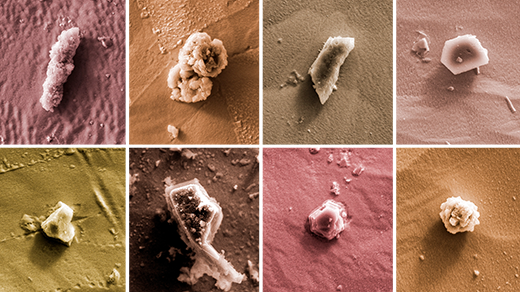
The prevailing theory of solar system formation describes a primordial dust cloud collapsing under gravity following a supernova shockwave, coalescing into planets through accretion. This process, governed by physical laws operating over millions of years, creates structured systems from chaotic clouds. Interestingly, the same principles of localized mass aggregation and external triggering events appear to govern the emergence of infectious disease hotspots, as evidenced by the concentrated meningitis cases in Kent during early 2024.
The Kent outbreak, with 20 cases reported in a geographically restricted area over 72 hours, defies standard epidemiological models that predict more diffuse transmission patterns. Like the solar nebula's denser regions that gravitationally dominate their surroundings, this cluster suggests an anomalous local condition—whether environmental, behavioral, or microbial—that amplified pathogen concentration beyond background levels. Just as Jupiter's formation accelerated nearby planetesimal capture through its gravitational influence, the Kent outbreak may represent a 'disease gas giant' whose emergence distorted regional transmission dynamics.
Recent advances in biomedical engineering offer an unexpected analogy to these cosmological processes. The development of 3D-printed 'spanlastics'—biodegradable implants that deliver anticancer drugs directly to tumor sites—mirrors accretionary growth mechanisms. These polymer-based structures accumulate therapeutic payloads much like protoplanetary disks gather icy and rocky particles, with both systems relying on controlled release mechanisms to maintain stability. Notably, spanlastics' ability to localize treatment parallels how gravitational wells in space confine material during star formation, suggesting a universal principle of constrained growth across physical and biological systems.
Extending this analogy reveals intriguing possibilities. If we model pathogen spread as a cosmic accretion process, interventions could be designed to disrupt 'infection disks' through targeted gravitational perturbations—such as vaccination campaigns acting as gravitational resonance sweeps to disperse clustered transmission. Conversely, spanlastic technology's localized action finds a cosmic counterpart in the solar system's late heavy bombardment phase, where concentrated impacts delivered volatile materials to inner planets, much like how these implants deliver chemotherapeutic agents to tumor 'planets.'
The convergence of these phenomena across 4.6 billion years and multiple scientific disciplines suggests a deeper, unifying principle: that self-organization through localized accumulation represents a fundamental cosmic behavior. Whether forming planets, propagating pathogens, or engineering medical implants, nature and technology alike seem bound by the same accretionary logic. This realization challenges traditional disciplinary boundaries, implying that the same equations governing interstellar dust clouds might one day optimize pandemic response strategies—or at least provide a compelling metaphor for public health officials seeking to explain 'why this outbreak had to happen here, now.'
In conclusion, we propose the establishment of 'astropaleopathology' as a new interdisciplinary field studying ancient disease patterns preserved in celestial bodies. Future missions to carbonaceous chondrite meteorites—themselves relics of the solar system's accretionary processes—may yet reveal fossilized pathogens that witnessed the birth of our planetary system. If discovered, these extraterrestrial microbes would serve as the ultimate irony: life emerging from the very stardust that first coalesced under the gravitational imperative to cluster, aggregate, and propagate across the cosmos.