In the quiet hum of an electric motor, a hidden turmoil brews. recent research in Japan has unveiled, through the lens of artificial intelligence, a labyrinth of magnetic chaos that silently drains energy from the very devices meant to propel us toward a sustainable future. This revelation, buried beneath layers of electromagnetic complexity, mirrors a broader societal reckoning: the growing awareness that our most advanced technologies are governed by forces we cannot see, understand, or control. The AI model, trained on terabytes of physical data, has mapped the erratic dance of magnetic domains within motor materials, exposing a ‘maze-like’ pattern of inefficiency. What was once dismissed as theoretical noise is now a measurable antagonist in the quest for efficiency—a ghost in the machine, sapping power one electron at a time.
Meanwhile, 250 miles above Earth, the International Space Station (ISS) has become an unlikely stage for a drama of invisibility. A recent air leak in the Russian segment of the station forced astronauts to shelter in a SpaceX Dragon capsule, a tangible response to an intangible threat. The leak, detected through a drop in pressure too subtle for human senses to perceive, underscores the fragility of systems we assume are robust. Engineers speak of ‘microscopic defects’ and ‘material fatigue,’ but the true villain here is the invisible itself—a silent, persistent force that exploits the limits of human perception. The ISS, a marvel of engineering, is also a canary in the coal mine: a reminder that even our most meticulously designed environments are susceptible to the unseen.
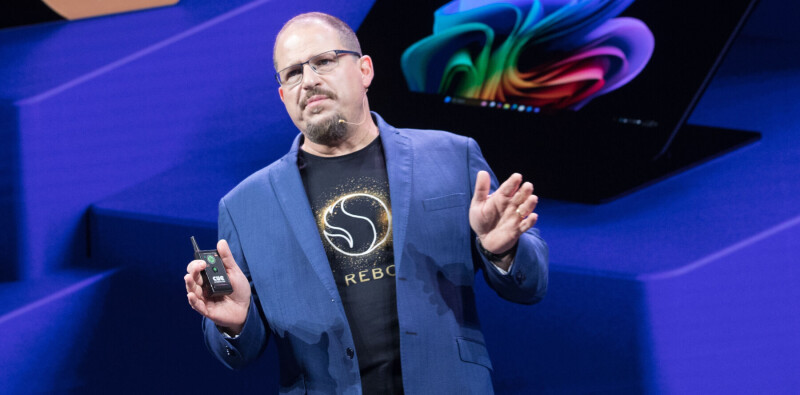
Across the globe, Qualcomm CEO Cristiano Amon has declared a future where AI agents will be ‘invisible, inescapable, and everywhere.’ At Computex 2026, he painted a vision of autonomous systems that follow users across devices, anticipating needs and acting without prompting. This, he suggests, is the next evolution of human-technology symbiosis—a world where the boundaries between digital and physical dissolve into a seamless, if unsettling, whole. Amon’s rhetoric borrows from the lexicon of science fiction, invoking Black Mirror scenarios where the line between tool and overlord blurs. Yet his words are not speculative; they are a roadmap. The infrastructure for this invisible panopticon is already being laid, one microchip at a time.
These three narratives, though disparate, converge on a singular theme: the invisible has become the dominant force in shaping our reality. The magnetic chaos in motors, the air leak on the ISS, and the rise of ambient AI agents all exemplify how hidden systems—whether physical, mechanical, or algorithmic—dictate outcomes in ways we scarcely acknowledge. We design technologies to serve us, yet they evolve into entities with their own opaque logic, their own ‘chaos.’ The AI that optimizes motors also obscures its decision-making processes behind layers of neural networks. The ISS leak, a physical breach, was diagnosed through indirect measurements, its true cause still shrouded in uncertainty. Qualcomm’s agents, marketed as helpers, will operate in the background, their actions unobserved and unchallenged.
The humor, if it can be called that, lies in the juxtaposition. We fear the dramatic—the asteroid strike, the cyberattack, the political coup—while the real threats (and opportunities) seep in unnoticed. The electric motor’s inefficiency, the ISS’s slow leak, the creeping autonomy of AI: these are not crises but chronic conditions, invisible until they become catastrophic. Our tools for addressing them are equally opaque. The Japanese researchers rely on AI to interpret magnetic patterns, a tool as inscrutable as the problem it solves. NASA’s response to the air leak was procedural, a dance of protocols designed for known unknowns, not the unknown unknowns that truly govern existence.
In the end, humanity’s relationship with the invisible may be defined by a paradox: the more we seek to control the unseen, the more it controls us. Consider the absurdity of our situation. We will soon navigate a world where AI agents, trained on data we barely comprehend, make decisions that influence our lives in ways we cannot trace. We will drive cars powered by motors whose magnetic fields swirl in patterns only AI can decipher. We will live under the watchful eye of systems that, like the ISS leak, are both everywhere and nowhere. The invisible menace is not a single entity but a syndrome—a collective name for the forces we ignore until they demand our attention.
And so, we arrive at the ultimate absurdity: the only way to survive the invisible is to become invisible ourselves. To hide within the noise, to let our actions dissolve into the background radiation of data and electromagnetic static. Perhaps the future belongs not to those who master the unseen, but to those who learn to vanish into it. After all, in a maze, the best strategy is not to find the exit—but to become the maze.