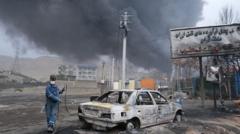
The concept of infrastructure has traditionally been associated with tangible constructs—roads, pipelines, data centers—designed to withstand physical and digital stresses. Yet recent developments across disparate domains suggest a more insidious threat: adversaries that operate not through brute force, but through adaptive, almost cunning exploitation of systemic vulnerabilities. From the microscopic maneuvering of bacteria to the geopolitical posturing of nation-states, the battle for control over infrastructure is evolving into a contest of subtlety and subterfuge.
Consider the humble bacterium. Recent studies at Arizona State University have upended decades of assumptions about microbial motility, revealing that pathogens like E. coli and salmonella employ a phenomenon called 'swashing'—a process wherein sugar fermentation generates microscopic fluid currents to propel colonies across surfaces. This method, devoid of the traditional flagellar 'propellers' long thought essential for movement, mirrors the stealthy logistical networks of modern insurgent groups. Just as 'swashing' allows bacteria to spread undetected through mucus membranes or laboratory agar, so too do cybercriminals and rogue states exploit hidden pathways in digital infrastructure to infiltrate systems. The parallel is striking: both domains prioritize evasion over confrontation, leveraging environmental conditions to achieve their ends.
Meanwhile, half a world away, the skies above Iranian oil depots have literally been set ablaze in a series of overnight strikes that witnesses describe as turning 'night into day.' While geopolitical analysts focus on the immediate implications for energy markets and regional stability, the attacks reveal a broader truth about infrastructure's fragility. The fuel depots targeted in Tehran and Karaj represent not just economic assets but nodes in a global supply chain vulnerable to asymmetric disruption. Fire and smoke, ancient tools of psychological warfare, here serve a dual purpose: physical destruction coupled with the symbolic erasure of darkness, a literal illumination of vulnerabilities long hidden in plain sight. This duality echoes the bacterial 'swashing' phenomenon, where environmental manipulation (fermentation-induced fluid dynamics) creates opportunities for advancement.
Iran's recent designation of 30-plus U.S. tech company facilities as 'legitimate targets' further blurs the lines between physical and digital infrastructure warfare. Facilities belonging to Amazon, Google, and Microsoft—companies that steward the global flow of data—are now framed as equivalent to traditional military assets. This strategic pivot reflects an understanding that modern infrastructure is no longer measured solely by pipelines and power grids but by server farms and undersea cables. The Al Jazeera report citing Tasnim news agency describes this as 'infrastructure warfare,' though the terminology feels almost quaint given the existential stakes. If a single data center outage can cripple financial systems or healthcare networks, then the digital realm has become the new battlefield where siege tactics are waged in lines of code rather than trenches.
The convergence of these three frontlines—microbial, geopolitical, and digital—suggests a universal principle: infrastructure under siege is defined not by its physical robustness but by its adaptive resilience. Bacteria evolve new motility mechanisms when old ones are blocked; oil depots are struck not for their individual value but to demonstrate systemic fragility; tech giants are targeted to expose the concentration risks of centralized digital architectures. Each scenario reveals a fundamental truth: the most effective attacks exploit the inherent interconnectedness of systems, turning their complexity into a liability.
Yet for all their differences, these domains share a common vulnerability to 'stealth infrastructure' tactics. Just as 'swashing' bacteria avoid detection by eschewing flagellar movement, so too do cyberattacks often masquerade as routine network traffic until damage is done. The Iranian oil strikes, visible as they were, relied on the element of surprise and the inability of defenders to predict which nodes would be targeted—a digital equivalent might be ransomware that lies dormant in a system for months before activation. In each case, the infrastructure itself becomes both the weapon and the victim, its design strengths transformed into weaknesses through adversarial creativity.
This analysis would be incomplete without considering the absurdity of drawing parallels between bacterial swarms and nation-state cyber armies. And yet, the parallels persist. Both operate through decentralized coordination, both thrive in environments of complexity, and both exploit gaps in defensive architectures that were designed for previous generations of threats. The molecular 'gearbox' discovered in certain bacteria—a biomechanical system that regulates movement with mechanical precision—finds an eerie analogue in the automated scaling algorithms that govern cloud computing resources. One regulates motion; the other regulates data flow. Both are examples of self-organizing systems that, when subverted, can lead to catastrophic failure.
In conclusion, the future of infrastructure security may lie not in thicker walls or stronger firewalls, but in understanding the evolutionary arms race between systems and their adversaries. If bacteria can develop novel motility strategies in response to antibiotic pressure, and if nations can reclassify data centers as military targets, then the next frontier of infrastructure defense may require borrowing lessons from the microbial world. Imagine, if you will, a future where AI-powered 'immune systems' patrol digital networks using algorithms inspired by the human microbiome, or where oil pipelines are designed with the fractal redundancy of bacterial colonies. The line between absurdity and innovation has never been thinner—and in the world of infrastructure under siege, it may be the only line that matters.