Gravity, the force that binds galaxies and governs the fall of apples, has recently found an unexpected partner in crime: the tech industry. What began as a fundamental force shaping the universe has morphed into a metaphorical playground where companies and scientists alike fling terms like 'antigravity' and 'AI chip' with gravitational disregard for accuracy. In this exploration, we delve into the cosmic and commercial forces that warp meaning, asking whether the real gravity of the situation lies in the phenomena themselves—or in the language used to describe them.
NASA’s Fermi Gamma-ray Space Telescope has long been a sentinel of the cosmos, peering into the violent births of stars. Its latest revelation, however, might as well have been a press release from a Silicon Valley startup. Scientists analyzing data from the superluminous supernova SN 2017egm detected a gamma-ray signal hinting at a magnetar—a neutron star spinning faster than a caffeinated cheetah—at the heart of the explosion. This finding, published in Nature Astronomy, suggests that the supernova’s extraordinary brightness was powered not by a single star’s collapse but by a celestial engine: a magnetar’s magnetic field converting mass into energy with an efficiency that would make Elon Musk blush. If this is the power source of the future, expect a Tesla-branded magnetar by 2025.
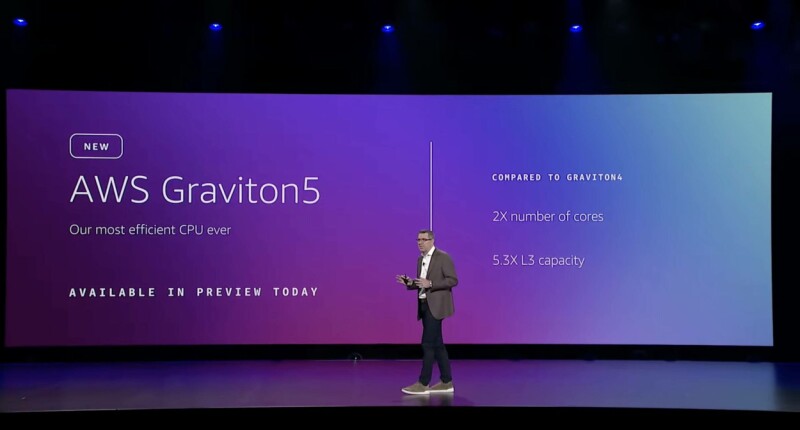
Meanwhile, in the realm of semiconductors, Amazon’s Graviton 5 chip has been hailed as a revolutionary 'AI chip,' a term so overused it risks losing all meaning. The Graviton 5, a custom ARM-based processor designed for cloud computing, is indeed a marvel of engineering. Yet labeling it an 'AI chip' is akin to calling a Swiss Army knife a 'screwdriver': technically true, but deliberately reductive. The Wall Street Journal and AWS press releases lean heavily into the AI narrative, framing the chip as a tool for 'agentic computing'—a buzzword so vague it could describe anything from a toaster to a time machine. Snowflake’s $6 billion commitment to AWS, tied to this 'agentic' future, raises questions: Are we witnessing a technological leap or a linguistic one?
Across the digital aisle, Google’s Antigravity tool has become a case study in gravitational economics. The agentic AI coding platform recently floated its pricing model upward, leaving developers scrambling like astronauts in zero gravity. The new structure—a choice between on-demand credits or a $250/month Ultra plan—has sparked outrage among smaller users, who argue that the changes defy the laws of economic accessibility. Google, ever the cosmologist, claims the shift aligns with 'market evolution,' a term as nebulous as dark matter. Critics counter that the price hike is less about evolution and more about escape velocity, leaving budget-conscious developers grounded while enterprise clients soar into the ionosphere of innovation.
The convergence of these narratives reveals a unsettling truth: The same gravitational forces that shape the cosmos are being repurposed as metaphors to obfuscate, market, and monetize. A magnetar’s fury becomes a power source; a chip’s versatility becomes an AI revolution; a pricing model becomes a lesson in 'market gravity.' The danger lies not in the phenomena themselves but in the collective delusion that language can bend reality like spacetime around a black hole. If we accept 'antigravity' as a pricing strategy or 'AI chip' as a technical specification, we risk losing the ability to distinguish between the cosmos and the catalog.
In conclusion, the gravity of the situation demands a reckoning. As supernovae illuminate the universe, so too must clarity illuminate the tech lexicon. Perhaps the solution lies in developing a gravitational lens—a conceptual tool to bend the light of marketing jargon back into focus. Until then, we remain adrift in an expanding universe of hyperbole, where the only constant is the pull of the punchier phrase. After all, in the words of the great physicist turned tech analyst, 'E=mc^2, but also, sometimes E=eyeballs.'